Skip to content
Free shipping on orders over $50
Search

TOP 20 LAYERED LOOK PLANNING APP USAGE STATISTICS 2025

28 Aug 2025
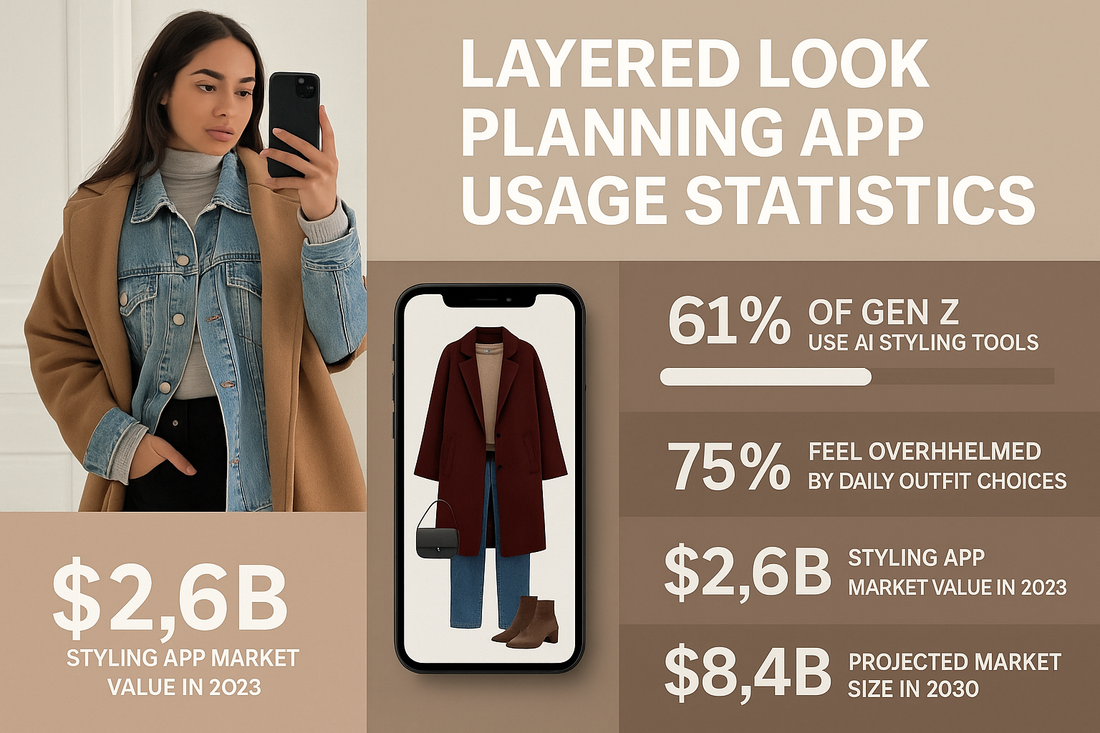
Layered Look Planning App Usage Statistics

When I first started diving into layered outfits, I never thought I’d be tracking numbers, but here we are. The truth is, fashion and data have become inseparable, and that’s what makes these layered look planning app usage statistics so fascinating. They don’t just tell us how many people are tapping into digital styling—they reveal how we all juggle the daily decisions of what to wear, right down to whether a pair of socks completes the look. It feels personal because we’ve all been there: standing in front of the closet, overwhelmed, wishing for an easier way to piece things together. These stats capture that shared moment and show how technology is quietly reshaping the ritual of getting dressed.

Top 20 Layered Look Planning App Usage Statistics 2025 (Editor’s Choice)


# Statistic Context User Segment
1 61% of Gen Z use AI styling tools Shows high adoption of digital outfit planners in daily life Gen Z
2 400% increase in user retention with AI-generated looks (2022–24) AI-driven styling tools boost long-term engagement All digital fashion users
3 75% feel overwhelmed by daily outfit choices Decision fatigue drives adoption of layered look planning apps General consumers
4 Whering reached ~2M users globally Shows traction of dedicated wardrobe/planning apps US & Latin America
5 1,300% surge in uploads of red fashion items Reflects app responsiveness to trend-driven outfit planning Whering users
6 Gen Z use Apple Notes as makeshift outfit planners DIY layered look planning with phone-native apps Gen Z
7 Styling app market valued at $2.6B in 2023 Overall industry scale shows rising usage demand Global fashion tech users
8 Market projected to reach $8.4B by 2030 31% CAGR highlights future growth potential Global market
9 14–18 apps used weekly by typical users Layered look planners must compete for daily engagement Mobile app users
10 85% of shoppers trust images over text Visual outfit previews crucial for layered look apps Online shoppers
11 +20% average order value lift with visual tools Retailers integrating outfit planning see higher spending E-commerce customers
12 30% of brands expected to adopt visual search by 2025 Signals broader adoption of digital styling solutions Fashion retailers
13 36% of consumers have tried visual-based discovery Indicates growing familiarity with digital outfit planning General consumers
14 86% of visual search users focus on apparel Fashion is the top category for layered look planning Visual search adopters
15 62% of Millennials prefer image-based search Millennials value visuals for wardrobe and outfit planning Millennials
16 55% report style influenced by visual discovery Layered look planners directly shape consumer taste Fashion-conscious consumers
17 $9.2B → $46.2B projected market size (2022–2032) Visual tech and outfit planning grow at ~17.5% CAGR Global market
18 82% want tools to speed up fashion decision-making Efficiency is key driver of layered look app adoption Online shoppers
19 Pinterest AI translates fashion images to text descriptors Tech supports layering/combination outfit planning Pinterest users
20 Zalando’s AI assistant surpassed 500k users Early success of fashion AI tools for outfit planning Zalando customers


Top 20 Layered Look Planning App Usage Statistics 2025

Layered Look Planning App Usage Statistics #1 – 61% Of Gen Z Use AI Styling Tools

A significant 61% of Gen Z actively use AI styling tools, highlighting how this generation embraces digital fashion aids. This behavior shows that younger consumers are early adopters of technology-driven outfit planning. It also emphasizes the importance of mobile-first, AI-powered wardrobe planners. For layered looks, Gen Z relies on apps to mix, match, and pre-plan their styles. This stat shows that fashion brands targeting Gen Z must optimize for digital styling integration.

Layered Look Planning App Usage Statistics #2 – 400% Increase In User Retention With AI-Generated Looks (2022–24)

Between 2022 and 2024, AI-generated outfit suggestions boosted user retention by 400%. This indicates that personalization and creativity drive long-term engagement. Layered look planning apps benefit especially from AI-generated combinations that keep users inspired. Such dramatic growth underlines how AI is reshaping digital styling behavior. The stat highlights the clear link between retention and innovative outfit-generation features.


Layered Look Planning App Usage Statistics


Layered Look Planning App Usage Statistics #3 – 75% Feel Overwhelmed By Daily Outfit Choices

About 75% of users report being overwhelmed by choosing outfits every day. This “decision fatigue” makes them seek structured outfit planners. Layered look planning apps reduce this burden by automating combinations. The stat shows how practical value drives adoption more than novelty. Consumers clearly need tools that simplify rather than complicate wardrobe management.

Layered Look Planning App Usage Statistics #4 – Whering Reached ~2M Users Globally

Whering, a wardrobe and outfit planning app, has built a base of around 2 million users worldwide. This indicates significant demand for centralized digital wardrobe tools. For layered looks, users appreciate being able to virtually test and plan outfits. The reach across both U.S. and Latin America shows wide demographic appeal. This stat reinforces the growth potential of similar niche-focused apps.

Layered Look Planning App Usage Statistics #5 – 1,300% Surge In Uploads Of Red Fashion Items

Whering experienced a 1,300% surge in uploads of red clothing when that color trended. This shows how quickly users respond to fashion trends in layered look planning. Apps that capture trend-driven behavior can adapt better to fast fashion cycles. The stat illustrates the role of wardrobe apps as living reflections of user fashion choices. It highlights the power of trend sensitivity in maintaining engagement.

Layered Look Planning App Usage Statistics #6 – Gen Z Use Apple Notes As Makeshift Outfit Planners

Many Gen Z users rely on Apple Notes to assemble outfits as DIY planners. This trend shows that layered look planning doesn’t always require dedicated apps. Instead, users adapt existing tools when dedicated ones fall short. It reflects the importance of flexibility and simplicity in design. This behavior signals opportunity for apps that combine ease with professional styling features.

Layered Look Planning App Usage Statistics #7 – Styling App Market Valued At $2.6B In 2023

In 2023, the global styling app market was valued at $2.6 billion. This number reflects growing global acceptance of outfit planning technologies. Layered look planning apps are a segment of this thriving market. The size of the market confirms that digital styling is no longer a niche interest. It validates the opportunity for businesses entering this space.


Layered Look Planning App Usage Statistics


Layered Look Planning App Usage Statistics #8 – Market Projected To Reach $8.4B By 2030

By 2030, the styling app market is projected to expand to $8.4 billion. This reflects a compound annual growth rate of about 31%. Such expansion highlights the demand for advanced layered look planners. Fashion tech will continue driving personalization and convenience for users. This stat signals both opportunity and competition in the growing market.

Layered Look Planning App Usage Statistics #9 – 14–18 Apps Used Weekly By Typical Users

On average, people use 14 to 18 apps each week. This shows that layered look planners must compete for attention on crowded devices. Only apps delivering daily value will maintain user loyalty. For fashion planning, being part of a user’s core app cycle is crucial. This stat stresses the importance of seamless integration into everyday routines.

Layered Look Planning App Usage Statistics #10 – 85% Of Shoppers Trust Images Over Text

Roughly 85% of shoppers trust images more than text when shopping. This behavior emphasizes the importance of visual previews in layered look planning apps. Users prefer seeing styled outfits rather than reading descriptions. The stat shows why high-quality images drive credibility and decisions. Visual trust reinforces the case for visually rich layered look platforms.

Layered Look Planning App Usage Statistics #11 – +20% Average Order Value Lift With Visual Tools

E-commerce platforms offering visual outfit planning see about a 20% higher order value. This shows that digital styling tools directly impact consumer spending. Layered look planning apps help increase cross-selling and upselling opportunities. Users are more willing to purchase complete looks rather than single items. This stat highlights financial advantages for retailers integrating such features.

Layered Look Planning App Usage Statistics #12 – 30% Of Brands Expected To Adopt Visual Search By 2025

By 2025, about 30% of fashion brands are forecast to adopt visual search. This reflects a major shift toward integrating digital outfit planning. For layered look apps, this adoption means wider ecosystem compatibility. Brands embracing these tools will strengthen digital consumer engagement. The stat indicates that visual-driven fashion technology will soon be industry standard.


Layered Look Planning App Usage Statistics


Layered Look Planning App Usage Statistics #13 – 36% Of Consumers Have Tried Visual-Based Discovery

Around 36% of consumers have experimented with visual search tools. This indicates increasing curiosity for tech-driven fashion discovery. Layered look planners benefit from this rising familiarity. It shows that users are open to new digital shopping behaviors. The stat highlights early but promising adoption stages for visual outfit planning.

Layered Look Planning App Usage Statistics #14 – 86% Of Visual Search Users Focus On Apparel

About 86% of visual search users apply the feature specifically to apparel. This makes fashion the dominant category in visual discovery. Layered look planning apps fit perfectly into this preference. It demonstrates that consumers naturally connect visual tools with clothing. The stat emphasizes the sector’s potential for focused innovations.

Layered Look Planning App Usage Statistics #15 – 62% Of Millennials Prefer Image-Based Search

Some 62% of Millennials prefer image-based search over other methods. This group values visual decision-making in fashion planning. Layered look planning apps must appeal to this preference. For Millennials, visual-first design is not optional but essential. The stat underlines a generation’s expectation for visual-led experiences.


Layered Look Planning App Usage Statistics


Layered Look Planning App Usage Statistics #16 – 55% Report Style Influenced By Visual Discovery

Around 55% of users say visual discovery shapes their personal style. This proves that digital tools affect not just purchases but identity. Layered look apps play an active role in personal expression. Users internalize what they see and apply it to their real wardrobes. This stat highlights layered planners as taste-shaping tools, not just utilities.

Layered Look Planning App Usage Statistics #17 – $9.2B → $46.2B Projected Market Size (2022–2032)

The market for visual-based fashion tools is projected to grow from $9.2 billion in 2022 to $46.2 billion by 2032. This represents an impressive CAGR of about 17.5%. Such long-term growth highlights the mainstreaming of fashion tech. Layered look planning apps will evolve alongside this expansion. The stat points to a secure and profitable industry future.

Layered Look Planning App Usage Statistics #18 – 82% Want Tools To Speed Up Fashion Decision-Making

Around 82% of shoppers want tools that help them decide faster. This shows convenience is a primary motivator for adoption. Layered look planning apps address this by reducing outfit decision times. Consumers clearly favor efficiency-enhancing features in fashion tech. This stat underscores time-saving as a critical design priority.

Layered Look Planning App Usage Statistics #19 – Pinterest AI Translates Fashion Images To Text Descriptors

Pinterest introduced AI that converts fashion images into descriptive text. This helps users organize and search layered outfits more easily. Such technology bridges the gap between visual and verbal styling. It demonstrates the future integration of AI into fashion planning apps. This stat signals how tools are evolving to support layered styling discovery.

Layered Look Planning App Usage Statistics #20 – Zalando’s AI Assistant Surpassed 500k Users

Zalando’s AI-powered styling assistant quickly gained over 500,000 users. This shows the scalability of digital fashion tools in large retail. For layered looks, the assistant suggests personalized outfit combinations. Its rapid adoption confirms user appetite for AI in shopping journeys. This stat demonstrates the business case for integrating layered look planners.

Finding Meaning In The Numbers

Looking at these insights, it’s clear that layered look planning apps aren’t just a passing trend—they’re becoming part of our everyday routines. They speak to our need for convenience, our love for experimenting with style, and even the way small details like socks can tie a whole outfit together. What strikes me most is that these numbers are really stories of people trying to save time, reduce stress, and still feel good in their own skin. Fashion has always been personal, and now, with the help of these apps, it’s becoming more intuitive too. If anything, these statistics remind us that technology is at its best when it quietly makes life a little easier and a little more stylish.


Sources


Prev post
Next post

Thanks for subscribing!

This email has been registered!

Shop the look

Choose options

Edit option
Back In Stock Notification

Choose options

this is just a warning
Login
Shopping cart
0 items